
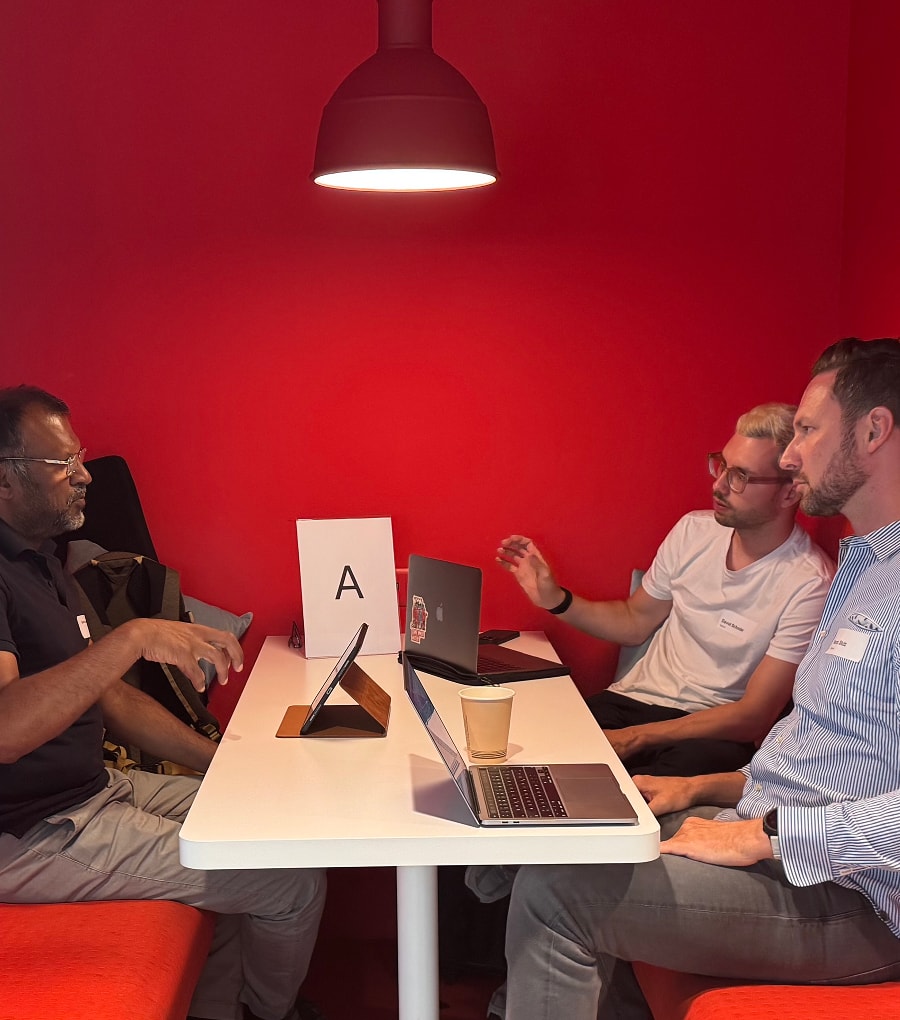




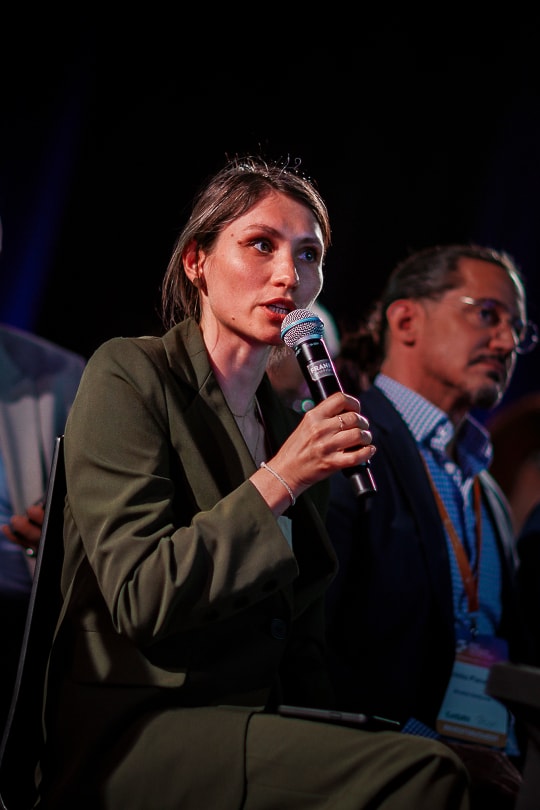







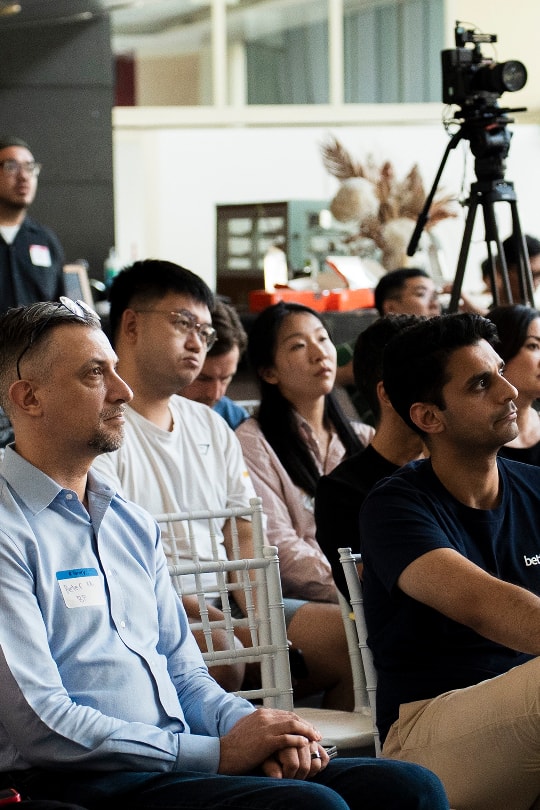





What is true of high-performance sport also applies to the fintech sector: it is not overall vision that determines success, but skill at overcoming challenges. The Tenity masterclasses show participants the three most common challenges and how start-ups are overcoming them.What is true of high-performance sport also applies to the fintech sector: it is not overall vision that determines success, but skill at overcoming challenges. The Tenity masterclasses show participants the three most common challenges and how start-ups are overcoming them.
Fintech start-ups and top-performing athletes have a lot in common: their vision, their speed and their goal. They see new technologies as opportunities and drivers of innovation. However, the idea alone is not the deciding factor, but rather its robust implementation –particularly in the heavily regulated Swiss financial market.
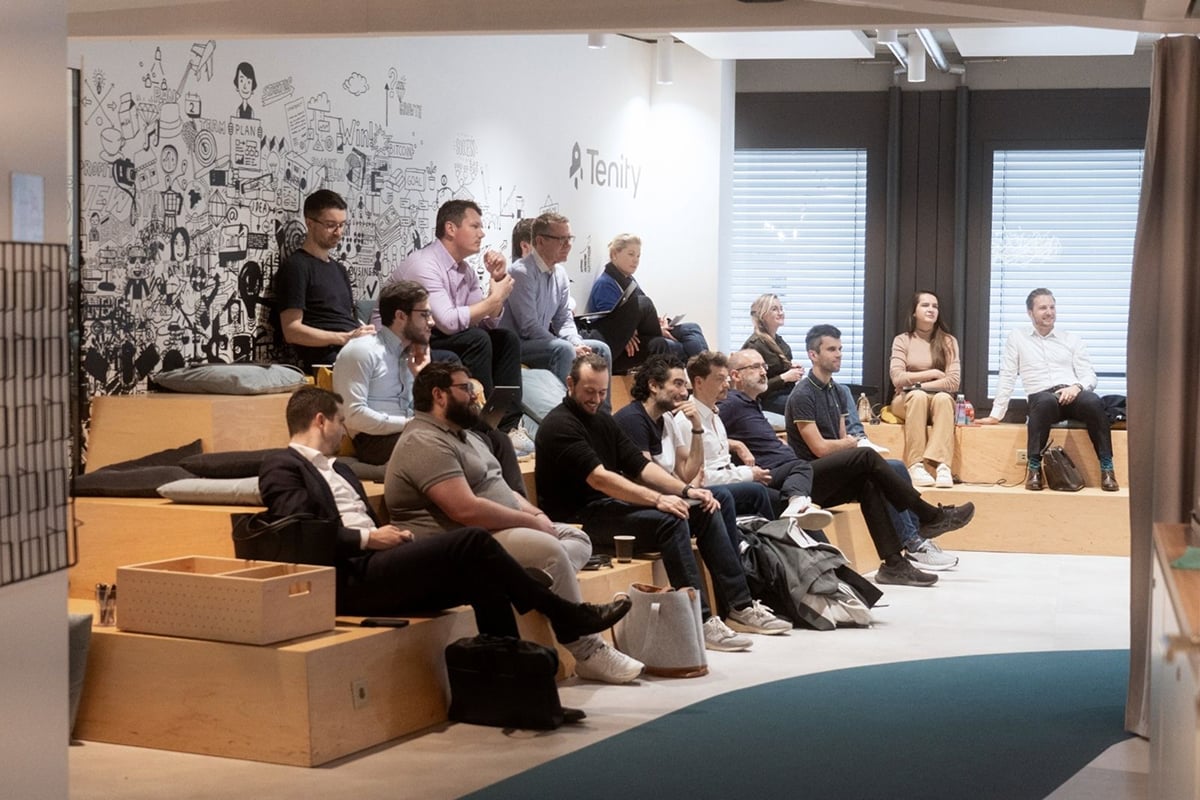
Since 2024, Ergon has maintained an innovation partnership with Tenity, a fintech innovation powerhouse and early-stage investor. Twice a year, Tenity selects 10 to 15 start-ups for its masterclasses. The aim is to support young fintech start-ups to enable them to move from a concept to amarketable solution. One focus is on identifying technical and regulatory challenges at an early stage and developing specific solutions before they become expensive or risky in the later stages of growth. This is where Ergon comes into play. Ergon identifies technical weaknesses early on, pinpoints potential and develops solutions together with the teams. In this way, Ergon connects with promising start-up teams and embraces fintech trends at an early stage. Ergon utilises this competitive edge for its customer projects.
The masterclasses make it clear that it is not the big tech questions that decide success, but rather the specific details that show whether a solution can be trusted to work reliably in every day situations.

Ergon has identified three recurring technological challenges that became apparent in the Tenity start-up masterclasses. These lessons can be utilised to develop sustainable fintech solutions:
Challenge 1: AI – from demo to production
AI isa core component of operations for many fintechs – for example, for automating KYC processes or analysing documents. However, processes that impress viewers in demos often fail in everyday life. This can be due to poor scans, multiple languages or unstructured data, for example. LLM-supported document processing in particular makes clear how challenging it is to achieve consistent and scalable results.
A stable foundation of clean data models and tested pipelines is essential. Teams that build this foundation early then scale faster. Companies that use demo code in production will have to make expensive modifications at a later stage. Unavoidable edge cases are best addressed with a human-in-the-loop approach: critical cases are examined systematically, lessons are learned from this and the models are iteratively refined. Audit trails and explainable AI are indispensable in the financialland scape.
Challenge 2: blockchain/Web3 – acceptance in place of hype
AI isa core component of operations for many fintechs – for example, for automating KYC processes or analysing documents. However, processes that impress viewers in demos often fail in everyday life. This can be due to poor scans, multiple languages or unstructured data, for example. LLM-supported document processing in particular makes clear how challenging it is to achieve consistent and scalable results.
A stable foundation of clean data models and tested pipelines is essential. Teams that build this foundation early then scale faster. Companies that use demo code in production will have to make expensive modifications at a later stage. Unavoidable edge cases are best addressed with a human-in-the-loop approach: critical cases are examined systematically, lessons are learned from this and the models are iteratively refined. Audit trails and explainable AI are indispensable in the financialland scape.
Challenge 3: compliance by design – embedding it early on
AI isa core component of operations for many fintechs – for example, for automating KYC processes or analysing documents. However, processes that impress viewers in demos often fail in everyday life. This can be due to poor scans, multiple languages or unstructured data, for example. LLM-supported document processing in particular makes clear how challenging it is to achieve consistent and scalable results.
A stable foundation of clean data models and tested pipelines is essential. Teams that build this foundation early then scale faster. Companies that use demo code in production will have to make expensive modifications at a later stage. Unavoidable edge cases are best addressed with a human-in-the-loop approach: critical cases are examined systematically, lessons are learned from this and the models are iteratively refined. Audit trails and explainable AI are indispensable in the financialland scape.
What the Tenity masterclasses taught us
Integration rather than duplication wins: AI pipelines, DLT nodes and compliance checks belong in the same observability and incident processes as the rest of the platform. Standardised interfaces and APIs are the key to lower complexity and faster scaling.
Tenity brings an international perspective to the table. Of the ten start-ups in a batch, often only two are from Switzerland. The other start-ups come from all over Europe, but often identify Switzerland as the core market. Many are already more mature in entrepreneurial and financial terms, but are struggling with the same tech challenges.
The three most important lessons learned from the masterclasses:
- Robustness beats speed: sustainable growth requires a solid foundation.
- A precise focus is key: a clear use case is more convincing than a universal promise.
- Compliance must be considered early on:integrating compliance into the architecture builds trust and saves time.
How Ergon creates added value
Ergon efficiently supports start-up teams from the initial idea to market success with a pragmatic approach that is focused on impact. Its experience ranges from the first e-banking solution in Switzerland to partnerships with VIAC, RULEMATCH and Crypto Finance, in addition to the development of its own SaaS platform AirlockIAM. The scaling,security and compliance challenges it has overcome are identical to those faced by many start-ups. As a result, Ergon is able to pass on its wealth of experience to start-up teams, who can directly benefit from this knowledge.
Ergon also has a wide range of expertise to offer: strategy and ideation, UX design, software engineering,security, cloud, data and AI. This end-to-end approach reduces handover losses and shortens time to market. Together with the Tenity ecosystem – which connects founders, corporate clients, investors and mentors – ideas become viable, regulation-compliant products more quickly.
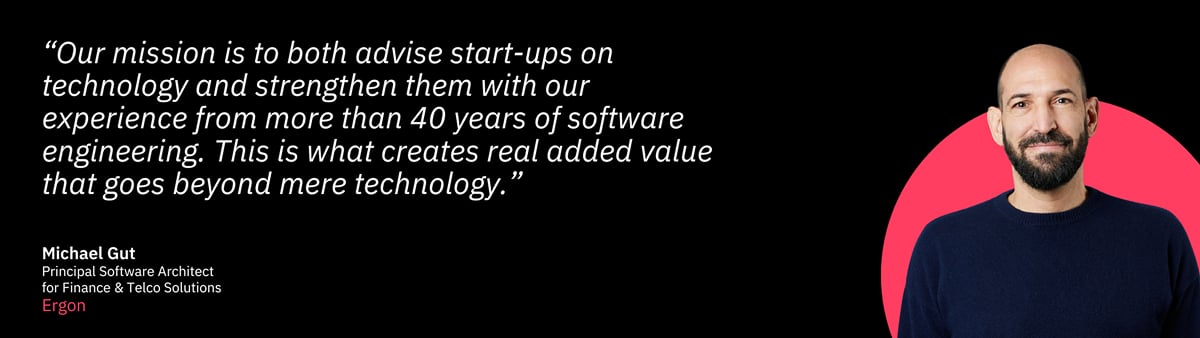
The key added value that Ergon offers start-ups:
- Experience from over 40 years of software projects: from the first Swiss e-banking solution to modern digital asset solutions.
- Direct lessons learned from the development of our own SaaS platform Airlock IAM – we were faced with the same scaling, security and compliance challenges that start-ups now have to overcome.
- End-to-end expertise from strategy, UX and engineering to security,cloud, data and AI.
- Close networking through the Tenity ecosystem for faster validation, cooperation and market access.
For top performance, simply functional is not enough
The question is not whether new technology can be implemented, but whether it passes the endurance test: is it safe, resilient and capable of being integrated? Preparing your tech architecture as you would an athlete for an important competition – right from the start – ultimately saves you valuable time. AI based on a solid data foundation, Web3 with bank-grade integration and compliance by design all gain the trust that is crucial in the financial sector. Thanks to these processes,fintechs will not only be quicker to reach the finish line – they will also be robust when they get there.