















Generative AI has already redrawn the map of modern banking. But in 2025, a new undercurrent is shaping how products, prototypes, and MVP can come to life: vibe coding.
First coined by AI pioneer Andrej Karpathy, the term began as internet shorthand for letting AI “follow the vibes” transforming broad intent into executable code. What once sounded playful now represents one of the most radical evolutions in how software is conceived, built, and iterated.
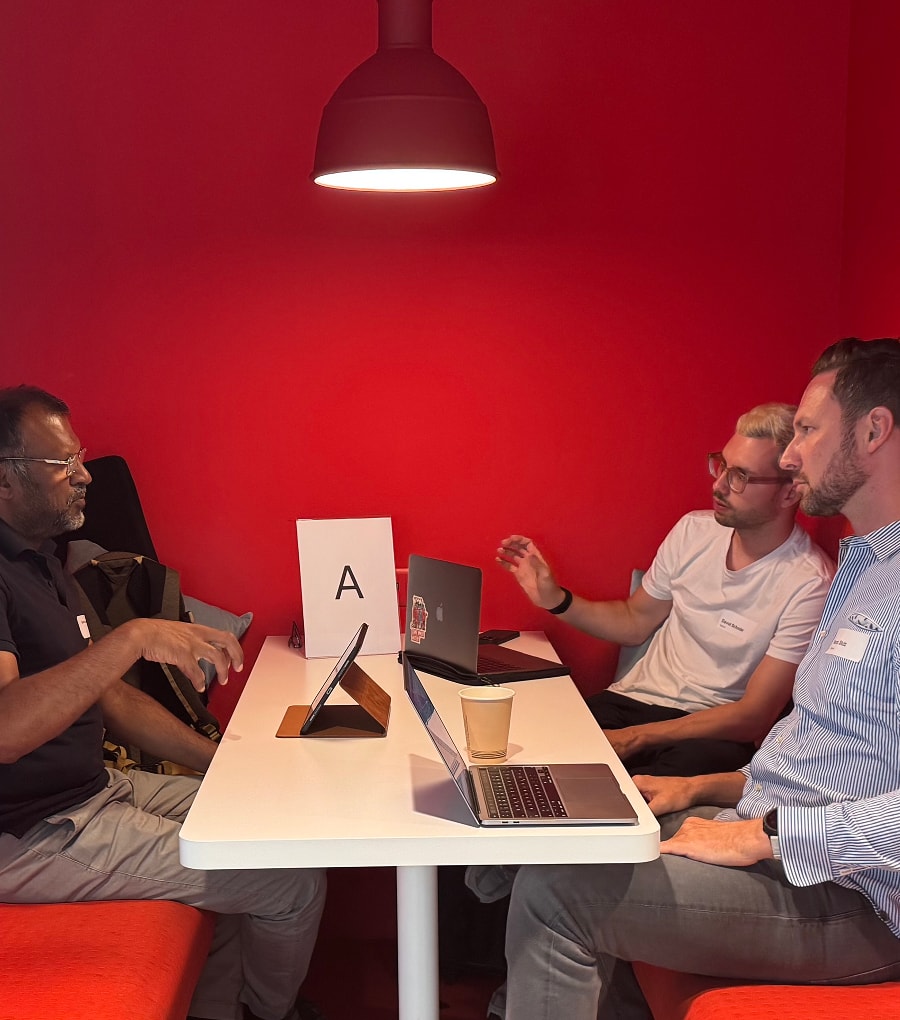
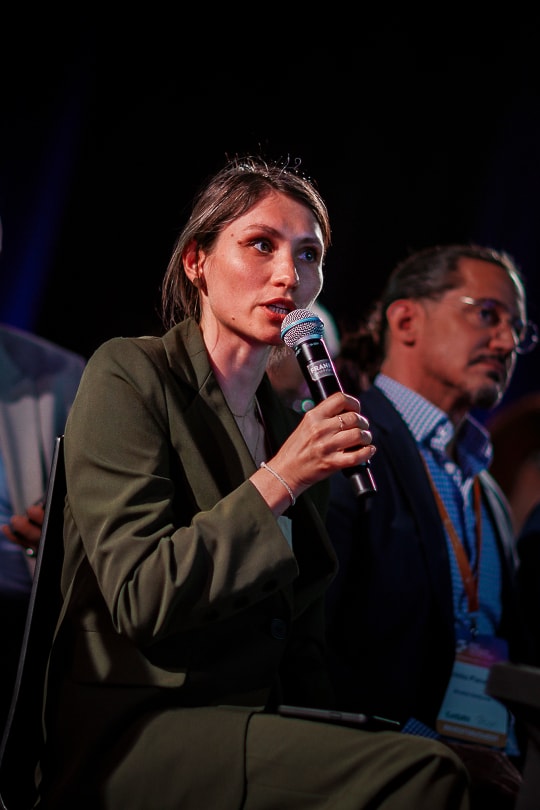
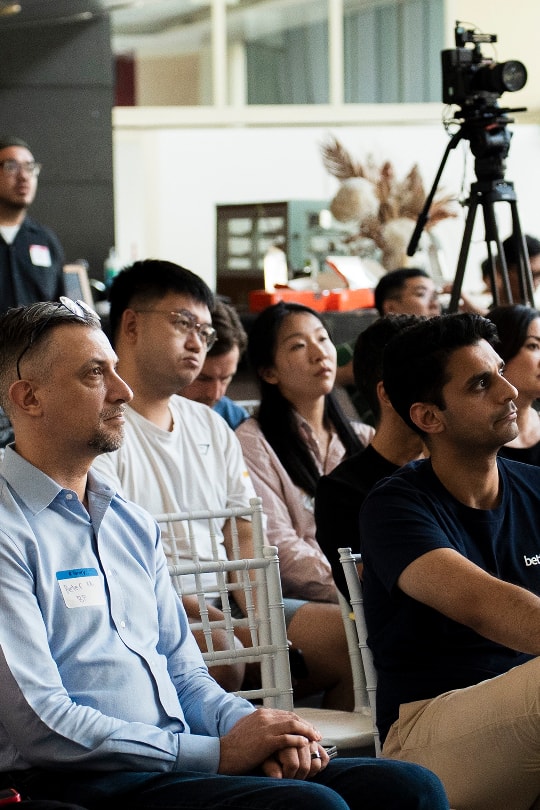
At Tenity’s Kickstarting AI Banking past event, our Intro to Vibe Coding & Prototyping Workshop gave participants a front-row seat to this movement not as a future promise, but as a working reality. Yet as the excitement builds, critical questions remain: Is vibe coding the dawn of frictionless innovation, or a mirage that hides new layers of technical and organizational complexity?
Author: Riccardo Balsamo
Riccardo Balsamo brings us insights from Tenity’s Kickstarting AI Banking session: how “vibe coding” the AI-driven shift from code-first to intent-first creation is quietly reshaping how banks design, test, and launch new digital products.
From Prompt to Prototype: The essence of Vibe Coding
At its core, vibe coding replaces code-first thinking with intent-first creation. Developers or increasingly non-developers describe what they want in plain language. The AI interprets, scaffolds, and builds.
The outcomes cover a spectrum of option from:
- Full automation, where AI generates complete apps from a single prompt;
- Assisted co-creation, where humans iterate alongside AI;
- Hybrid refinement, where teams treat AI code as a draft to test, adapt, or discard
Two recent studies map the human factors behind those outcomes. Good Vibrations? (a qualitative study) shows how trust and a team’s willingness to delegate determine whether work flows or stalls. Vibe Coding in Practice (a grey-literature review) surfaces the persistent speed vs. quality trade-off that practitioners face in the wild. Together they underline a simple truth: success in vibe coding depends less on raw model power and more on clarity, communication, and guardrails between human and machine
Both highlight a critical truth: the success of vibe coding depends less on technical capability and more on trust, clarity, and communication between human and machine. In other words you need to know what (and how) to tell to the vibe coding tool you are using
In banking, a domain built on precision, compliance, and trust that makes vibe coding both a thrilling opportunity and a delicate balancing act.
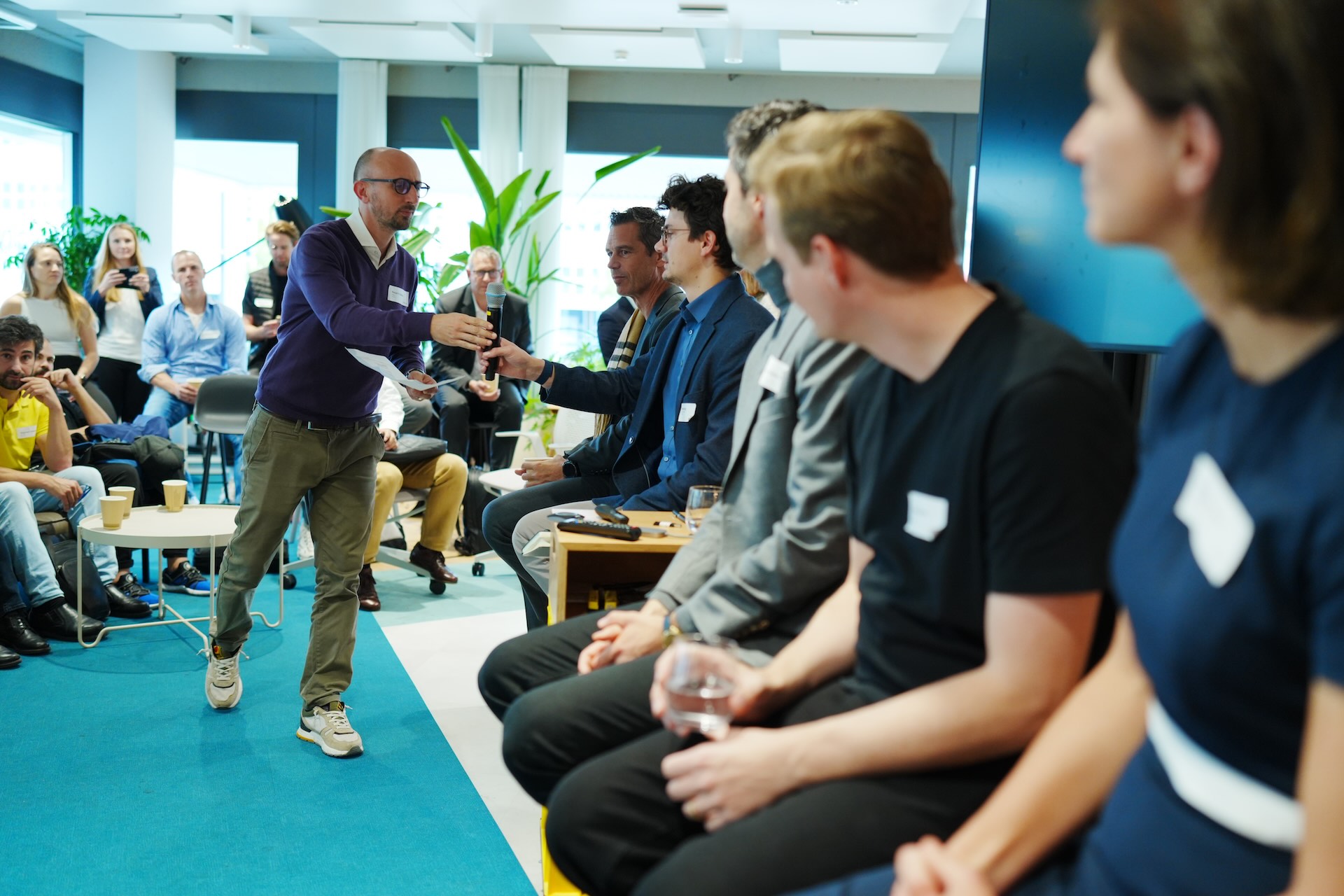
At Tenity, we don’t explore trends in isolation. We test them.
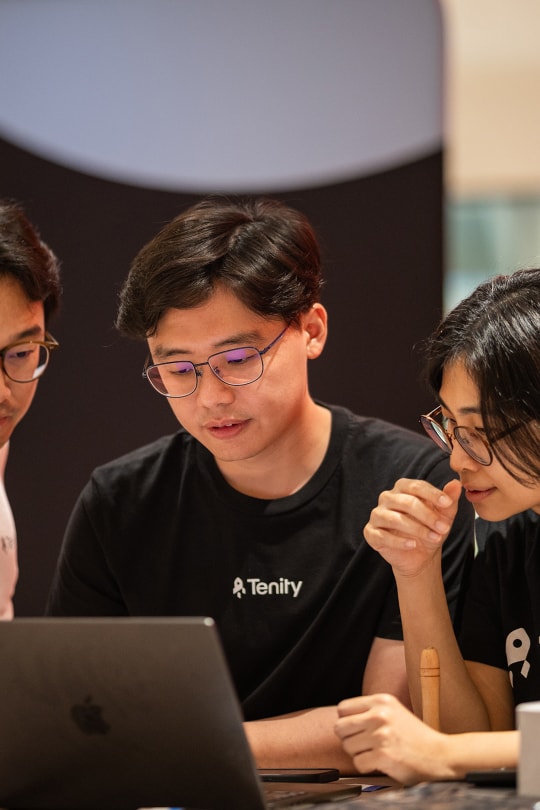
During the workshop, participants built simple prototypes using AI co-creation tools from Customer Sentiment Analyzers that extract themes from feedback, to Anomaly Detectors for fraud signals, to AI-driven Credit Risk Scoring tools that explore fairness-aware modeling.
The takeaways were telling:
- Speed wins early, but governance wins later. Teams moved from idea to working demo in hours, but maintaining quality and explainability required disciplined oversight.
- Prompting is the new programming. Effective prototypes came not from technical syntax, but from how clearly participants described context, constraints, and intent.
- AI extends creativity, not control. The best outcomes emerged when humans led strategically and let AI explore the edges.
The new builders: How AI is empowering the solo-preneur
Perhaps the most underestimated outcome of vibe coding is who it empowers.
Armed with AI-driven development tools, a single founder or even a domain expert with minimal coding background can now build a working fintech prototype in days.
This shift is democratizing innovation and fragmenting competition.
For incumbents, that means:
- A faster innovation clock: where startups and individuals can outpace traditional R&D cycles.
- New collaboration models: where banks can tap into networks of “solo innovators” to co-develop and test emerging solutions.
Vibe coding doesn’t just change how things are built.
It changes who gets to build.
A more collaborative Tech Stack
Modern vibe coding blurs traditional roles:
- Product teams become prompt engineers.
- Compliance and risk officers co-design prototypes.
- Developers evolve into AI orchestrators.
This reconfiguration of creative ownership is significant and risky. Democratization must not become decentralization without control. As one Tenity mentor put it during the session:
“Innovation without governance is just improvisation.”
Banks that master this choreography balancing open experimentation with structured oversight will define the next era of digital finance.
Signals, Myths, and Market momentum
2025 has brought a wave of investment and experimentation: platforms like Replit, Cursor, and Lovable are becoming core tools for fintech builders. Some reports claim that up to half of new codebases now contain AI-generated segments.
Yet the numbers can deceive. Benchmarks like FeatBench show leading AI agents still succeed on fewer than 30% of real-world feature requests. The promise of “one prompt = one product” remains aspirational.
Meanwhile, new risks are emerging:
- Shadow IT — teams building unsanctioned tools beyond IT governance;
- Debugging opacity — AI code that works, but can’t be explained;
- Cultural resistance — developers wary of being reduced to “prompt janitors.”
If 2023–2024 were the years of AI enthusiasm, 2025 is the year of AI realism. The conversation has matured from what’s possible to what’s sustainable.
The Leadership Playbook: From experiment to enterprise
Banks and Corporates now face a strategic choice: follow the trend or lead the transition. From Tenity’s perspective, leadership requires discipline in five dimensions:
- Design with guardrails — treat AI output as a draft, not a deliverable.
- Build AI Prototyping labs — safe environments where innovation and compliance coexist.
- Train for AI Literacy — across all functions, not just engineering.
- Institutionalize learnings — capture insights from prototypes to guide strategic decisions.
- Own the narrative — shape public understanding through transparent research and case studies.
Vibe coding will not replace developers but it will redefine what developing means.
The Hard Truth: Where the vibes break.
Despite its momentum, vibe coding still faces structural headwinds:
- Ambiguous prompts yield risky assumptions.
- AI-generated code often hides brittle dependencies.
- Debugging and scaling prototypes remain non-trivial.
- Regulatory and security demands outpace tool maturity.
In other words, the vibes don’t yet equal viability. But they do mark the start of something profound a transition from slow, human-coded innovation to dynamic, AI-augmented creation. It allows to 20X shrink the cycle from ideaation to a full working prototype. Obviously building a fully scalable banking application is a different game all together
The typical journey (and challenges) of most of the beginner vibe coders are:
- The “I’m a genius” rush → Ambiguous prompts.
Early scaffolds feel magical, but fuzzy intent leads the AI to confidently build the wrong thing. Tighten the brief before you touch the model.
- Down the rabbit holes → Brittle dependencies.
Tool-hopping and agent stacks create hidden links; a minor change upstream can snap the whole prototype. Keep v1 within a single, well-understood stack and mock anything external.
- The addiction loop → Debugging and scaling pain.
Chasing the next prompt hit crowds out tests. Add a two-pass check: AI-generated tests + human edit, then run a basic load/latency pass before any demo leaves the lab.
- Hitting the wall → Governance and security gaps.
Free tiers, opaque code paths, and unclear data lineage collide with banking-grade expectations. Wrap v1 with guardrails: input validation, minimal logging/monitoring, and a one-page model card (purpose, data, risks, mitigations).
Conclusion: Coding the Future of Banking
The Kickstarting AI Banking session was not a showcase, it was a signal.
A signal that banking’s next chapter won’t be written solely in boardrooms or codebases, but in collaborative human-AI ecosystems where ideas move from concept to prototype at the speed of thought.
The challenge for leaders is not to fear AI’s creative unpredictability but to channel it, govern it, and turn it into trustable, scalable innovation.
We believe the banks and corporates that win in this decade will be those who move beyond the hype building not just with AI, but through AI, guided by strategy, integrity, and governance.