











In this edition, we sat down with Sebastian Otutuama, Co-Founder and Managing Director of AQUATY, and an alumnus of the flagship Tenity Zurich Fin/Tech Accelerator, launched in March 2025.
Few founders combine deep technical expertise with first-hand investment experience like Sebastian. With a background in computer science and venture capital, he’s now building infrastructure that brings speed, efficiency, and transparency to private markets.
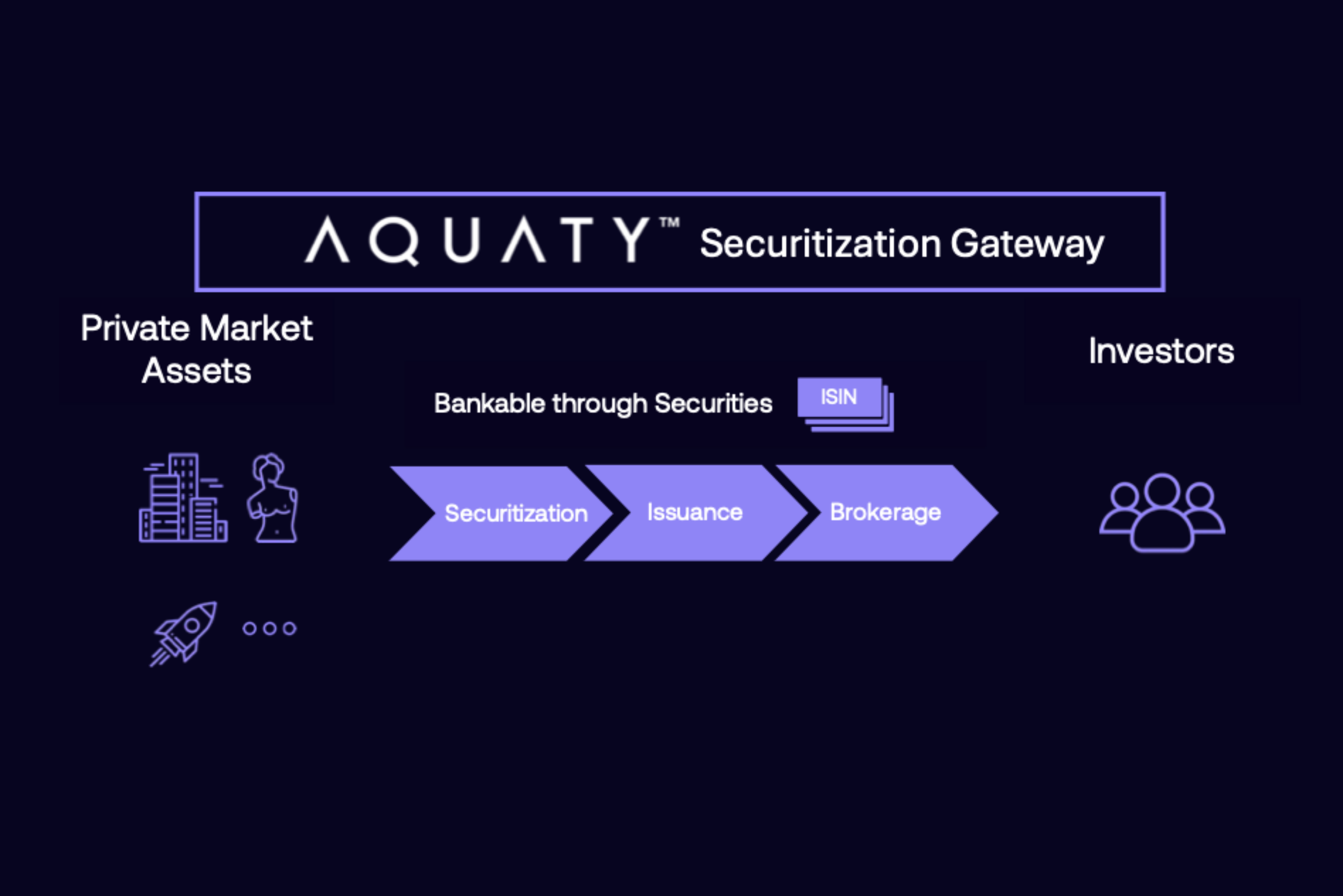
AQUATY is a digital platform that makes private market investments bankable. It provides a Securitization-as-a-Service ecosystem, empowering individuals and institutions to create and distribute financial products across asset classes such as private equity, private credit, infrastructure, real estate, venture capital and even art.
Its end-to-end solutions support a wide range of investment structures, settlement layers and distribution channels, ensuring simple, secure and compliant transactions for both issuers and investors.
Following a successful beta phase, the company raised €2.3 million in pre-seed funding to accelerate its expansion. Just in October, AQUATY launched a new solution for private market bonds to meet the growing demand in private credit, real estate and infrastructure.
In this interview, he shares the frustration that sparked AQUATY, the lessons that shaped his entrepreneurial journey, and how tokenized finance is redefining how value moves across the global economy.
Let’s start with an introduction. For readers new to you, who is Sebastian, what is AQUATY, and what inspired its creation?
Hi, I’m Sebastian, the Co-Founder and Managing Director of AQUATY. The idea for AQUATY came from a frustration I experienced firsthand. After selling my first company, I joined a regulated venture investment fund managing both public and private assets.
The contrast between the two was shocking: transactions in public markets took one click, while deals in private markets could take months to complete. As a computer scientist, I knew both systems were powered by software, so I started asking: why is one instant while the other takes months?
The answer was securities. Public markets are fully digital, while private markets remain manual and paper-based.
AQUATY was born from that insight: to automate and digitize private market securities, making transactions a hundred times more efficient.
The financial industry is rapidly evolving as blockchain becomes a core infrastructure layer. What is this shift enabling and where does AQUATY fit in?
This transformation is driven by two forces: one technological, one societal.
On the technology side, digital markets have existed since the 1970s, or what we call the “NASDAQ moment” when stock exchanges first became electronic. Over the past decade, decentralized ledgers (or “DeFi”) like blockchain have emerged as the next infrastructure layer. There is also a well-developed traditional financial market layer around CSDs like Clearstream or SIX SIS (called “TradFi”). At AQUATY, we support both DeFi and TradFi rails agnostically for private market assets.
But what truly drives AQUATY is the societal shift. Private markets are booming. Investors want access to private equity, debt, infrastructure, and real assets, not just public stocks. When BlackRock says that it expects its revenue to reach $35B by 2030, with 30% coming from private markets and technology, it’s clear where the world is heading.
Our mission is to make these private transactions as seamless and investable as public ones.
Before founding AQUATY, you worked as a Venture Partner and mentioned you were “frustrated with the processes.” What lessons from that experience influence how you build and lead today?
Working in a fund taught me the importance of avoiding “design mistakes” early. In finance, if you don’t standardize your systems from day one, you’ll pay for it later, sometimes five or ten years down the line.
That mindset shaped how we build at AQUATY: setting up scalable, compliant systems early to avoid costly rework later. It’s a discipline that comes from being both an investor and an engineer.
You have a background in computer science. Did you always know you wanted to build your own company?
Pretty much, yes. I wrote my first program at 15 or 16, and that feeling of creating something from nothing was deeply fulfilling. At the same time, I’ve always wanted to create value for others. I knew early on I wasn’t meant to spend my life inside a large corporation. Building something new felt more natural.
When I built my first startup in 2015, we coded the entire product from our laptops. That sense of empowerment, that you can build something meaningful from nothing, was the tipping point. And today, with AI, the barriers to doing that are even lower.
This was your first startup, veed, which was later acquired by Studydrive. What lessons did that experience teach you that you’ve carried into AQUATY?
The biggest one: solve a problem you personally experience. Veed was born from a real issue: students couldn’t easily communicate with each other outside class, especially before exams. Some were too shy to ask questions in person, so we built a digital space where they could. Engagement took off because it was authentic to our needs.
That same principle applies to AQUATY. I experienced firsthand how inefficient private market transactions were, so I built what I wished existed.
The second lesson is choosing the right people. Building a company is not a solo sport. I was lucky to have great co-founders then, and equally lucky now.
You need to know your strengths, recognize your blind spots, and bring in people who make the team better than any single founder could be.
Speaking of which, you now have three co-founders, including Robert Jeggle and Alexander Grimm, who joined in 2024. How did you think about assembling the right mix of skills?
A startup is like a sports team: you win by combining complementary strengths. AQUATY sits at the intersection of technology, law, and finance. You need experts in all three.
Robert and I are opposites in many ways. I’m deep in technology and product, he’s a force in regulation and compliance. But as we scaled, we realized we needed a third dimension: business and operational experience.
Alexander had successfully scaled a fintech across five countries and 300 employees. Bringing him in created a perfectly balanced leadership team. We’re very different personalities, but that’s what makes us strong.
Founders should ask themselves not just what they’re good at, but what they aren’t, and who can fill that gap.
On that note, we’re seeing a new wave of founders turning to AI agents instead of traditional co-founders. What’s your take on that trend?
AI drastically reduces production costs, whether you’re writing code, designing, or creating content. But it can’t take responsibility or build trust.
A true co-founder isn’t just someone who helps you work fast; they share ownership, accountability, and the emotional burden of building something from scratch. AI can assist, but it can’t replace that. You can delegate tasks to AI, but not responsibility.
You once shared that “Google rejected me after nine rounds of engineering interviews.” What did that experience teach you about resilience?
It taught me to believe in myself even when others don’t. After my first company, I wasn’t ready to jump into another startup, so I applied to Google, which was the gold standard for engineers at the time.
I went through nine interviews, made it to the top 1.5%, and then got rejected over a minor detail. It was tough. But three months later, I started what would become AQUATY.
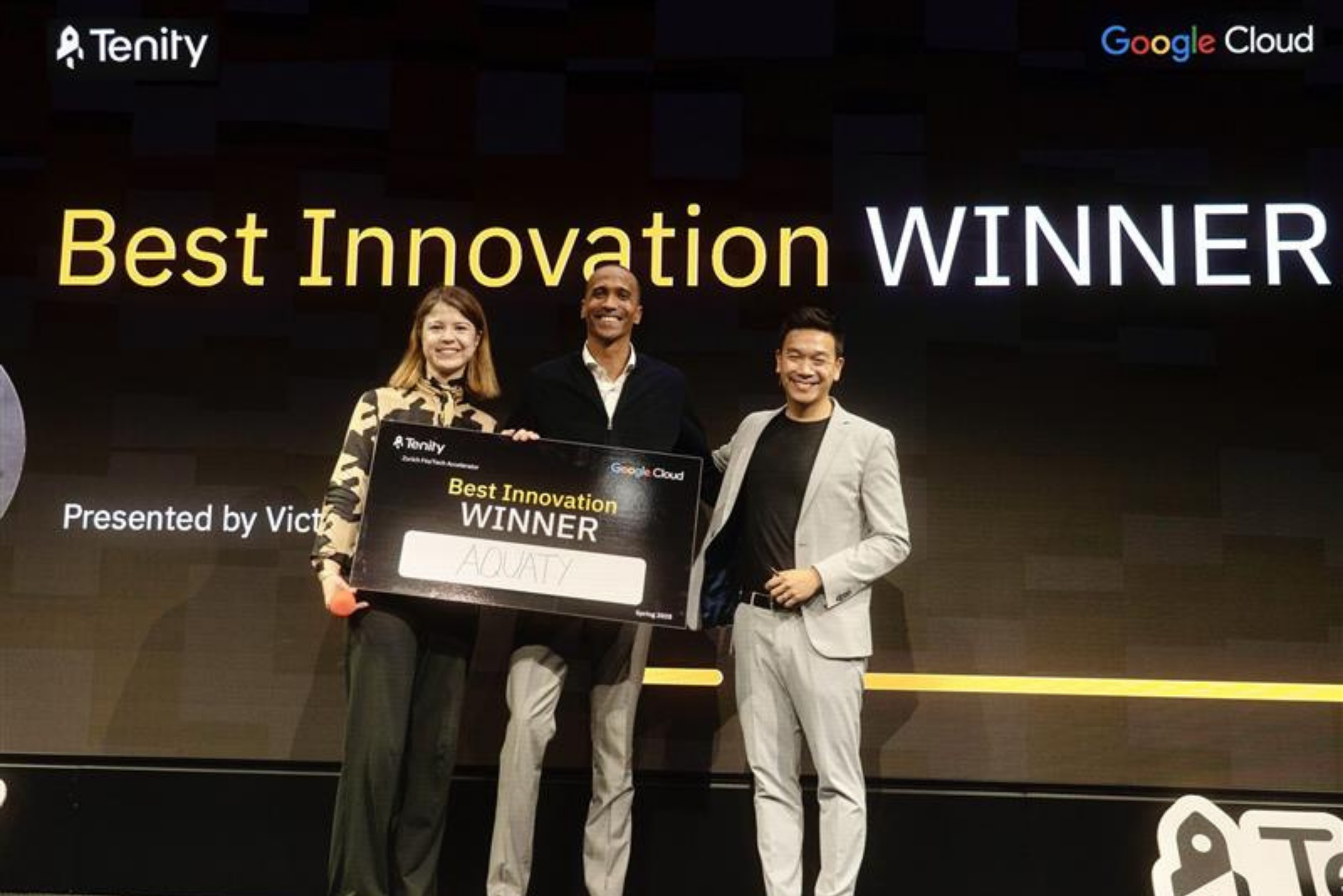
And six months after that, one of my Google interviewers reached out again to say the position was open. I said no. I was already building my company. Not long after, I was standing on stage at Google Zurich, winning the award for “Best Innovation” at the Tenity’s Demo Day, with the same interviewer in the audience. It was a full-circle moment.
That experience taught me that sometimes rejection is often just redirection. That conviction eventually brings you to the right place.
The German government’s WIN initiative aims to strengthen Germany’s startup ecosystem. From your view, what still needs to happen for it to compete with the likes of London or the US?
Government programs like WIN are well-intentioned, and it’s good that they invest billions into innovation. But speed is still the missing factor.
Incorporating a company, opening up a bank account, or applying for grants can take weeks. In places like Estonia, these steps can be done in a day. That difference matters.
If we want to compete globally, what will help founders more than subsidies are fewer barriers, faster execution, and a culture that rewards experimentation, not paperwork. Capital helps, but removing friction helps even more.
You joined Tenity’s Zurich Fin/Tech Accelerator in 2025. What motivated you to join, and how did it shape AQUATY’s growth?
Switzerland is one of Europe’s leading issuer markets and home to the SIX Exchange, a major hub for financial innovation.
For us, joining the Tenity program was the perfect environment to connect with the established financial ecosystem and test our product in real markets.
The program exceeded expectations. Three months in, the former CEO of SIX Exchange, Christian Reuss, joined our advisory board. This was something that had never happened before. That was a huge validation and opened doors we couldn’t have accessed otherwise.
Funding is an enabler, but our biggest milestone is market traction. We’ve unlocked new asset classes and security types, especially in fixed-income products, and are serving a growing number of institutional clients.
Next, we’re focused on scaling: working with larger issuers, bigger distributors, and strengthening our footprint across Europe.
Lastly, what’s one piece of advice you’d give to early-stage founders navigating their next big decision?
Be fast. Don’t overthink every decision. Decisions don’t have to be perfect, they have to be made.
Speed compounds, and it’s often what separates the good founders from the great ones. The world moves quickly, so should you. Be brave, be thoughtful, and move forward.
From his early coding experiments and frustrations to challenging the inefficiencies of global finance, Sebastian’s journey is proof that persistence and purpose can take you where you need to be, and even reshape entire systems.
As AQUATY continues to grow, he remains guided by the same principle that started it all and one that echoes throughout our conversation: to build products that empower people, not just processes, and make the world of investing more accessible, transparent, and human.
Stay tuned for more Ten Questions with Tenity, where bold ideas come to life. If you enjoyed Sebastian’s story, be sure to check out our past interviews to discover more inspiring journeys from Tenity founders shaping the future of fintech and beyond.